


What Is Top Grain Leather
If you've ever shopped for a leather bag, sofa, or pair of shoes, you've almost certainly come across the term "top grain leather." It appears on product pages, in brand descriptions, and across marketing material, sometimes used almost interchangeably with "genuine leather" or "full grain leather," which only adds to the confusion. So what does it actually mean, and why does it matter when you're making a purchase?
This article breaks down exactly what top grain leather is, how it's made, and where it sits in the wider world of leather quality.
The Basics: What Is Top Grain Leather?
Top grain leather comes from the upper layers of an animal hide, most commonly cowhide or buffalo. It's the second-highest grade of leather you'll find on the market, sitting just below full grain leather in terms of quality and natural integrity.
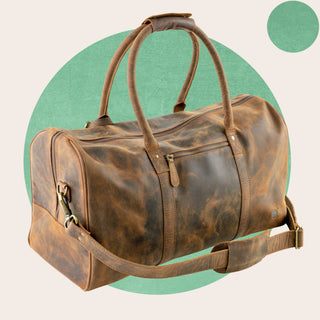
The defining characteristic of top grain leather is that it has been sanded or buffed on its surface. This process removes the outermost layer of the hide, known as the grain, which is where natural imperfections like scars, insect bites, and stretch marks are most visible. Once the surface is smoothed down, a finishing coat is applied, often pigment, a protective polymer, or an embossed texture, to give the leather a consistent, refined appearance.
The result is a material that looks clean and uniform, which is a large part of why it's so popular in commercial leather goods.
How Top Grain Leather Is Made
Understanding the production process helps clarify what you're actually getting with top grain leather.
It starts with a raw hide, which is cleaned, tanned, and dried. Tanning is the process that transforms raw animal skin into the durable, stable material we know as leather. The most common method for top grain leather is chrome tanning, which uses chromium salts to speed up the process and produce a softer, more pliable result compared to traditional vegetable tanning.
After tanning, the hide is split into layers. The top layer, the one closest to the outer surface of the animal, is where top grain leather comes from. This layer is the most durable and tightly structured part of the hide. The lower layers are used for split leather or suede.
From there, the top layer is sanded to remove surface blemishes. How aggressively this sanding takes place determines the final character of the leather. Light sanding produces a more natural-looking result; heavier sanding creates a more uniform surface that requires a thicker finish coat to compensate for the texture that's been removed.
Finally, the finishing coat is applied. This is what gives top grain leather its smooth, polished look and adds resistance to stains and moisture.
Top Grain vs. Full Grain Leather
The comparison that comes up most often is top grain versus full grain leather, and it's worth spending time on because the differences are meaningful.
Full grain leather retains the entire outer surface of the hide, imperfections and all. Nothing is sanded away. Because of this, full grain leather shows the natural texture and variation of the animal's skin, and over time it develops what's known as a patina: a rich, deepening character that comes from use and exposure. This aging process is considered highly desirable by leather enthusiasts.
Top grain leather, by contrast, has had that outermost layer removed. The benefit is a more consistent appearance straight out of production. The trade-off is that the leather loses some of the dense, tightly interlocked fibre structure of the full grain surface, which makes it slightly less durable over time. The finishing coat also creates a barrier that can limit how much the leather breathes and how it ages.
That said, top grain leather is still a high-quality material. It's thinner and more uniform than full grain, which makes it easier to work with and well-suited to applications where a clean, refined look is the priority.
Top Grain vs. Genuine Leather
Here's where a lot of shoppers get caught out. "Genuine leather" sounds like a quality marker, but it actually refers to the lowest grade of real leather. It is made from the split layers left over after the top grain has been separated. It's heavily processed, typically coated in thick layers of synthetic finish, and far less durable than either top grain or full grain leather.
If a product is labelled "genuine leather," that technically means it is real leather rather than synthetic, but it says very little about quality. Top grain leather is a significant step above genuine leather in both durability and overall character.
What Top Grain Leather Is Used For
Top grain leather is one of the most widely used materials in the leather goods industry, and for good reason. Its combination of durability, consistent appearance, and relatively accessible price point makes it practical across a wide range of products.
Handbags and accessories. Many mid-to-high-end handbag brands use top grain leather for their main collections. The smooth, even surface takes dye well and holds up to daily use.
Furniture. Top grain leather is common in sofas, office chairs, and car interiors. It's easier to maintain than full grain leather and tends to resist staining better thanks to its protective finish.
Footwear. Dress shoes, boots, and casual footwear frequently use top grain leather because of its uniform surface and workability.
Wallets and small leather goods. The relative thinness of top grain leather makes it a practical choice for items that need to remain slim.
The Pros and Cons of Top Grain Leather
What works in its favour:
Top grain leather is durable and holds up well under regular use. It's more resistant to stains and moisture than full grain leather because of its surface coating. It has a consistent, polished appearance that suits formal and professional aesthetics. It's also more affordable than full grain leather, since it can be produced from hides that would otherwise be rejected for cosmetic imperfections.
Where it falls short:
The sanding process removes some of the natural strength of the hide, so top grain leather won't last quite as long as full grain leather with equivalent care. The surface coating can crack or peel over time, particularly with cheaper production methods. It also doesn't develop the same rich patina that makes full grain leather so appealing to those who want their goods to age gracefully.
How to Identify Top Grain Leather
If you're shopping and want to confirm what you're looking at, there are a few things to pay attention to.
Top grain leather tends to feel smooth and consistent to the touch, with very little natural variation in texture. The surface often has a slight sheen from the finish coat. When you look closely, you won't see the natural grain patterns that are visible on full grain leather, or if you do, they'll be embossed rather than organic.
Good-quality top grain leather will still feel substantial and firm. If the leather feels thin, papery, or plasticky, it may have a very heavy synthetic coating or could be a lower-grade material altogether.
Checking product descriptions carefully helps. Reputable brands will specify whether their leather is top grain or full grain, and that distinction is usually worth noting.
Is Top Grain Leather Worth Buying?
For most purposes, yes. Top grain leather offers a strong balance between quality and cost. It's a real, durable leather product that will last for years with reasonable care. If you're buying a leather sofa, a work bag, or a pair of dress shoes that you want to look good and hold up to daily use, top grain leather is a sensible and well-established choice.
Full grain leather is better if longevity and natural character are the priority, but it commands a higher price and the aesthetic is different. For everyday practicality, top grain leather sits in a comfortable position: above the mass-market options and genuinely fit for purpose.
The key is knowing what you're buying. Top grain leather is a legitimate, quality material, as long as you're not paying full grain prices for it.
Caring for Top Grain Leather
The surface coating on top grain leather makes it relatively easy to maintain, but it still benefits from regular care.
Wipe it down with a clean, dry cloth to remove dust and surface dirt. For deeper cleaning, use a dedicated leather cleaner rather than household products, which can strip the finish.
Apply a leather conditioner every few months to keep the material supple and prevent it from drying out and cracking. Keep it away from direct sunlight and excessive heat, both of which can cause the finish to fade or crack over time.
With consistent care, top grain leather goods can last many years and continue to look presentable throughout their lifespan.
Final Thoughts
Top grain leather is exactly what its name suggests: leather taken from the top layer of the hide, refined for a consistent finish. It's not the highest grade of leather available, but it's a quality material with genuine durability and a clean, professional appearance.
Knowing where it sits relative to full grain and genuine leather means you can shop with confidence, understand what you're paying for, and make choices that match both your budget and your expectations. Whether you're furnishing a room, investing in a bag, or replacing a wallet, that kind of clarity is worth having.

Frequently Asked Questions
Is top grain leather real leather?
Yes, top grain leather is genuine animal hide. It goes through the same tanning process as any other real leather. The sanding and finishing steps refine its appearance, but the base material is entirely natural.
How long does top grain leather last?
With regular care, top grain leather products can last 10 to 20 years. The exact lifespan depends on the quality of production, how heavily the item is used, and how well it's maintained. Items that are cleaned and conditioned periodically will hold up significantly longer than those that are neglected.
Does top grain leather scratch easily?
The protective finish coat on top grain leather provides a reasonable level of scratch resistance, more so than full grain leather. That said, sharp objects and rough surfaces can still mark it. Minor surface scratches can often be buffed out or treated with a leather conditioner.
Does top grain leather peel?
Low-quality top grain leather with a thick synthetic coating can peel over time, particularly around areas of heavy flexing like armrests or bag handles. Higher-quality top grain leather with a thinner, well-applied finish is far less prone to this. Peeling is more commonly associated with bonded leather or heavily coated genuine leather.
Can top grain leather get wet?
Top grain leather can handle light moisture reasonably well due to its surface coating, but it shouldn't be soaked or left wet for extended periods. If it does get wet, blot the moisture away with a dry cloth and allow it to dry naturally at room temperature, not near a heat source. Applying a conditioner afterwards helps restore suppleness.
Is top grain leather good for sofas?
Top grain leather is one of the most popular choices for sofas and upholstered furniture. It's durable enough for daily use, easier to clean than full grain leather, and available in a wide range of colours and finishes. For a household sofa that needs to look good and handle regular wear, it's a practical and well-regarded option.
What is the difference between top grain and bonded leather?
Bonded leather is not a grade of real leather, it's a manufactured material made from scraps and fibres bonded together with adhesive and coated with a synthetic surface. It shares almost nothing with top grain leather beyond the name "leather." Bonded leather is significantly less durable, prone to peeling, and generally found in budget products. Top grain leather is a fundamentally different and superior material.
How can you tell if leather is top grain?
Top grain leather typically feels smooth and consistent, with little natural variation in texture. The surface has a slight uniformity to it, any grain pattern you see has usually been embossed rather than grown. It also tends to have a faint sheen from the finish coat. If the product description specifies "top grain," that's the clearest confirmation, since reputable manufacturers will name the leather grade directly.
Is top grain leather better than PU leather?
PU leather is a synthetic material made from polyurethane, it contains no animal hide. Top grain leather is a natural material with greater durability, breathability, and longevity. PU leather is cheaper and can mimic the look of real leather, but it doesn't age the same way and typically has a shorter lifespan. For a long-term purchase, top grain leather is the more durable investment.
Does top grain leather need conditioning?
Yes. Even with its protective surface coating, top grain leather benefits from conditioning every three to six months. Conditioning keeps the hide supple, prevents the surface from drying out, and extends the overall lifespan of the product. Without it, the leather can become stiff and start to crack, particularly in dry climates or with frequent use.
Share


