


What is Full-Grain Leather? The Complete Guide to Quality, Characteristics & Value
Full-grain leather is the highest quality leather available, cut from the outermost layer of the hide, with the natural grain surface left completely intact. No sanding, no buffing, no corrections. Just the hide exactly as it was, with all the strength, character, and longevity that comes with it.
If you're researching full-grain leather for the first time, you've probably noticed that "premium" gets thrown around a lot in the leather world, attached to products that don't always deserve it. This guide cuts through that noise. You'll learn exactly what full-grain leather is, how it's made, how it compares to every other leather grade, and how to identify it before you buy.
What is Full-Grain Leather?
If you've ever held a piece of leather that felt alive, that had weight, warmth, and a kind of quiet confidence to it, there's a good chance you were holding full-grain leather. It sits at the very top of the leather quality pyramid, and everything below it is, frankly, playing catch-up.
Full-grain leather is cut from the outermost layer of the hide, with the natural grain surface left completely intact. No sanding. No buffing away imperfections. What you see is exactly what the animal's skin looked like, its fiber structure, natural markings, and all. That's not a flaw. That's the point. Those marks are what give full-grain leather its legendary durability and that gorgeous patina it develops over time.
What "Grain" Means in Leather
A hide has three distinct layers.
The outermost is the grain layer and it's dense, tightly interwoven collagen fibers that give leather its strength and character. Below that sits the corium, a looser, spongier layer that's useful but structurally weaker. And beneath that? It's essentially unusable for quality leather goods.
The grain layer is where all the action is. According to ASTM D2099 testing standards, the tensile strength of leather correlates directly with how much of the original grain layer is preserved. The more intact it is, the tougher and more durable the final product.
Why Full-Grain Is Preserved, Not Corrected
Most commercial leather, even leather marketed as "premium", goes through a correction process. Manufacturers sand, or abrade the surface to remove natural blemishes: bug bites, healed scars, stretch marks. What's left looks uniform and clean. It also looks a little... lifeless.
Full-grain leather skips that entire process. Every mark stays exactly where it is. A scar from a fence wire, a pattern from where the hide was thickest, those aren't flaws to hide. They're proof that you're working with a real, natural material rather than something that's been processed into submission.
The tradeoff with corrected grain is that you've physically removed part of the strongest layer to achieve that smooth, consistent appearance. It's like sanding down the bark of an old-growth tree to make it look neater. In a way you're trading raw strength for cosmetic uniformity.
This is also where the phrase "genuine leather" deserves some serious scrutiny. Despite sounding like a quality guarantee, genuine leather is actually one of the lower grades. It is typically made from the leftover split layers after the grain has been separated off. The Leather Industries of America and standards bodies like ASTM International and ISO 17131 define leather grades clearly, but labeling laws in the US don't require brands to specify which grade they're using. So "genuine leather" on a tag tells you almost nothing useful.
The hierarchy, from best to worst, looks like this:
Full-Grain → Top-Grain → Genuine Leather → Bonded Leather
Full-grain sits at the top because nothing has been taken away from it. Top-grain is sanded smooth and usually has a protective coating applied. It still has decent quality, but you've lost some of the natural surface. Genuine leather is split leather with a finish coat. And bonded leather? That's leather scraps and fibers glued together with polyurethane. It's basically the particle board of the leather world.
How Full-Grain Leather Is Made
Raw hide straight off the animal is nothing like the leather you hold in your hands. Left untreated, it would rot, stiffen into a board, or fall apart entirely. Tanning is the process that transforms it into something that can outlast generations, and how you tan determines almost everything about the final product.
There are two dominant methods, and they couldn't be more different from each other.
Vegetable Tanning
Vegetable tanning is the old way. The slow way. The right way, if you're chasing quality. Hides are submerged in large pits filled with water and natural tannins extracted from tree bark like oak, chestnut, mimosa. The process takes anywhere from weeks to several months. The result is leather with incredible density, a satisfying firmness, and an almost magical ability to develop character over time. It's also far more biodegradable and uses far fewer synthetic chemicals. In that way, it aligns with LWG certification standards and the broader goals of the Vegetable Tanning Consortium.
Chrome Tanning
Chrome tanning is the industrial approach. Hides are tumbled in large drums with chromium sulfate salts, and the whole process wraps up in a day or two. The leather comes out softer and more uniform right away. This is why chrome tanning dominates commercial production, speed is cheap, and softness sells. It's not inherently bad leather, but it does raise environmental flags. REACH regulations in the EU have placed strict limits on chromium use for exactly this reason.
For full-grain leather specifically, vegetable tanning is the more complementary process. Chrome-tanned full-grain exists and has its uses, but veg-tanned full-grain tends to age more gracefully developing that deep, rich patina rather than simply wearing out.
The Finishing Process
Once the tanning is done, most commercial leather gets dressed up. A lot of it. Pigment coatings, surface sprays, synthetic topcoats are layers designed to make inconsistent leather look consistent. The more finishing you add, the more you're masking what's underneath.
The most coveted finish for full-grain leather is aniline dyeing where the hide is submerged in a translucent dye bath that colors the leather all the way through without adding any surface coating. The grain and the natural texture stays completely visible and fully breathable. You're seeing the leather as it actually is, with color enhancing rather than concealing. The downside? Aniline leather is more sensitive to moisture and staining because there's no protective layer buffering it.
Semi-aniline adds a light pigment coat on top of the dye, giving a little more protection while still showing most of the natural character. It's a reasonable middle ground for products that need to handle daily wear without constant babying.
Then there's wax finishing which is common in pull-up leathers. In this process oils and waxes are worked into the hide instead of coating the surface. The result is leather that scratches visibly but heals with a little heat and pressure, and deepens in color with use. It's tactile, honest, and deeply satisfying in the way that only well-made things tend to be.
Key Characteristics of Full-Grain Leather
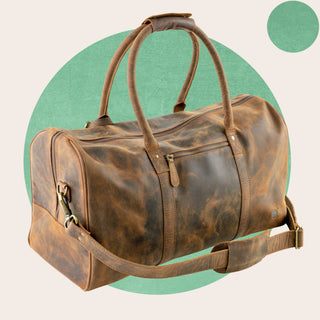
Patina is the gradual deepening, darkening, and softening of the leather's surface as it absorbs oils from your hands, exposure to light, and the general friction of daily life. On a lesser leather with a thick pigment coating, none of that gets through and the surface stays static until it starts cracking and peeling. On full-grain leather, every interaction leaves a subtle trace, and over months and years, those traces accumulate into something genuinely beautiful.
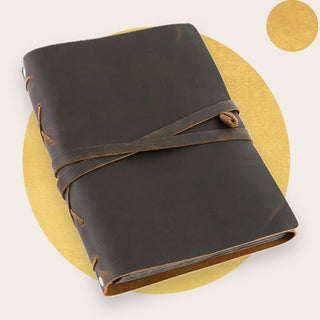
The timeline varies depending on how often you use the piece and how much direct contact it gets. A wallet carried daily can start showing real character within three to six months. A bag that gets used a few times a week might take a year or two to really hit its stride.
The areas that flex and crease the most like the corners, straps, fold lines tend to develop patina fastest and this gives each piece a usage map that's completely unique to its owner. That's not wear and tear. That's a leather good earning its story.
Durability & Longevity
If patina is the soul of full-grain leather, durability is its backbone.
Full-grain leather's tightly packed collagen fiber structure gives it a resistance to tearing, abrasion, and general beating that no other leather grade can match. There's also the repairability factor. Full-grain leather goods can be resoled, restitched, reconditioned, and restored in ways that bonded or corrected grain leather simply can't. The material has enough integrity to withstand reworking. That "repair, don't replace" mentality isn't just good for your wallet, it's genuinely better for the planet.
Types of Full-Grain Leather
Within the full-grain category, there's a range of finishes and treatments that change how the leather looks, feels, and performs day-to-day. Understanding the differences helps you buy smarter and set the right expectations for whatever piece you're investing in.
Aniline Full-Grain Leather
Aniline full-grain leather is the purest expression of what leather can be. It's dyed all the way through with translucent aniline dyes. No pigment layer on top, no surface coating, nothing between your hand and the hide. What you get is leather that breathes, moves, and feels completely alive. The pore structure is fully visible, the natural markings are on full display, and the color has a depth that pigmented leather simply can't replicate.
Semi-Aniline Full-Grain Leather
Semi-aniline full-grain leather sits right in the sweet spot between raw naturalness and practical protection. It starts the same way as aniline. It is dyed through with translucent dye, but then gets a very light pigment coating applied to the surface. We're talking a whisper of protection, not a full mask.
The result is leather that still shows the grain clearly, still develops patina over time, but resists everyday spills and scuffs considerably better than its aniline counterpart.
Pull-Up / Wax-Coated Full-Grain Leather
Pull-up leather might be the most tactilely satisfying material in the leather world. It's full-grain hide saturated deeply with oils and waxes. The pull-up leather is not coated on the surface, but worked into the fibers themselves. When you flex, bend, or scratch it, the waxes migrate and create a lighter "pull-up" effect that's visible in real time. Drag your thumbnail across it and watch it lighten. Rub it with your thumb and watch the color come back.
Pull-up leather is the go-to for outdoor gear, rugged boots, and heritage accessories for a reason: it's practically self-healing. Light scratches disappear with body heat and a quick buff. It darkens and enriches with use. And because the waxes and oils are worked throughout the leather rather than sitting on top, they don't flake or peel.
Full-Grain Leather vs Other Leather Types
Full-Grain vs Top-Grain Leather
Think of top-grain as full-grain's younger sibling who got a nose job. The raw material is again the outermost layer of the hide, but then manufacturers sand the surface smooth to remove any natural imperfections, and apply a protective finish coat on top.
Top-grain leather isn't bad leather. It's genuinely decent, more stain-resistant than aniline full-grain, and easier to produce at scale. The trade-off is that you've removed a portion of the densest fiber layer, which reduces long-term durability. It also won't develop the same depth of patina because the finish coat acts as a barrier that slows the natural aging process considerably.
For someone who wants a leather bag that looks sharp on day one and doesn't need a lot of maintenance, top-grain is a reasonable choice. But if you're thinking in decades rather than seasons, full-grain wins every time.
Full-Grain vs Genuine Leather
Genuine leather is typically made from split hides, the lower layers left over after the grain has been separated. Those layers lack the tight fiber structure that makes leather strong, so they're coated heavily with polyurethane or pigment finishes to make them look presentable.
In practice, it's one of the weakest leather grades on the market.
Full-Grain vs Bonded Leather
Bonded leather shows up in budget furniture, office chairs, and fast-fashion accessories, so it's worth a mention.
It's made from shredded leather scraps and fibers bonded together with polyurethane adhesive, then embossed with an artificial grain pattern to look like real leather. The leather content can be as low as 10-20%. It has none of the breathability, none of the aging properties, and none of the structural integrity of genuine hide. Within two to three years of regular use, bonded leather typically starts to crack and peel in sheets, which is a particularly grim look on a couch you paid real money for.
Full-Grain vs Faux / Vegan Leather
Faux leather or PU leather, synthetic leather, vegan leather is a different category entirely, and it's worth being clear-eyed about what it actually is. Most of it is a plastic-based material (polyurethane or PVC) that mimics the look of leather without using any animal product. For people who are committed to avoiding animal materials, it's a legitimate choice.
That said, from a pure durability and environmental-lifespan standpoint, the story gets complicated. Most faux leathers don't last as long as quality full-grain leather, and because they're petroleum-based plastics, they're not biodegradable. Some newer plant-based alternatives like cactus leather, mushroom leather, apple leather are genuinely interesting from a sustainability angle, though none have yet matched full-grain's performance over time.
How to Identify Full-Grain Leather
The Pore & Surface Test
The single most reliable way to identify full-grain leather is to look at the surface under good lighting, natural light works best. Full-grain leather has an irregular, organic pore pattern. No two sections look exactly alike. You'll see variation in pore size, subtle differences in texture, and if you look closely, the kinds of natural markings that only come from a real animal hide.
Corrected grain and genuine leather, by contrast, have a suspiciously uniform surface. The pore pattern repeats too perfectly because it's been embossed or stamped on after the natural surface was sanded away. If it looks like it was printed, it probably was.
The Bend & Feel Test
Pick up the piece and bend it gently. Full-grain leather flexes with a kind of responsive suppleness, it has give, but you can feel the density behind it. When you release it, it returns to shape without creasing awkwardly. The edges on quality full-grain goods are also telling: they're often finished by hand with burnishing or edge paint, and the cut edge shows layered, tight fibers rather than a foamy or fibrous interior.
Bonded leather and low-grade genuine leather tend to feel either stiff and plasticky or unnervingly soft in a hollow way like there's nothing structural underneath. Trust your hands. They know the difference faster than your eyes do.
The Smell Test
This one sounds odd, but it works. Genuine full-grain leather, especially vegetable-tanned, has a distinctly warm, earthy, slightly sweet smell that's almost impossible to fake convincingly. It's one of those scents people describe as "exactly what leather should smell like."
Faux leather, bonded leather, and heavily coated genuine leather tend to smell chemical, plasticky, or simply like nothing much at all. If you pick up a wallet and it smells like a new shower curtain, that's information worth having.
Reading the Label (and Knowing When It's Lying)
The Federal Trade Commission (FTC) has guidelines around leather labeling in the US, but they're frustratingly loose in practice. Brands are required to accurately describe the material, but there's no mandatory grading system that forces them to specify which type of leather they're using. So "genuine leather," "real leather," and "top-grain leather" can all appear on tags without any meaningful distinction being made clear to the consumer.
A few label red flags worth knowing:
"Genuine leather" as we covered earlier, this is a grade, not a quality promise. It's actually near the bottom of the hierarchy.
"Leather upper" or "man-made materials" on footwear especially, this phrasing often means the visible surface is leather but everything structural underneath isn't.
No material breakdown at all - if a brand won't tell you what their leather is, that silence is telling you something.
"PU leather," "vegan leather," or "bonded leather" - these are not leather in any meaningful sense of the word.
How to Care for Full-Grain Leather
Cleaning Full-Grain Leather
For regular maintenance, a slightly damp cloth wiped across the surface is enough to lift dust and surface grime without disturbing the leather's natural oils. For anything more stubborn, dried mud, food residue, built-up dirt in seams, a small amount of saddle soap applied with a damp cloth works well. Work it in gently with circular motions, wipe away the residue, and let the piece dry naturally away from any direct heat source.
Two things to avoid religiously: harsh chemical cleaners and direct heat. Chemical solvents strip the oils that keep full-grain leather supple. Direct heat like hairdryers, radiators, direct sunlight for extended periods causes the leather to dry out and can crack the surface in ways that are genuinely difficult to reverse. Full-grain leather dries best slowly, at room temperature, like a good piece of meat resting after the heat.
Conditioning Full-Grain Leather
Conditioning is where the real long-term maintenance happens, and it's more rewarding than it sounds. The leather's natural oils deplete over time with use and exposure, and conditioning replenishes them, keeping the fibers supple and preventing that dreaded cracking.
For most full-grain leather goods, conditioning every three to six months is sufficient under normal use. High-use items like daily bags or work boots might benefit from conditioning every couple of months, especially through dry winter months when indoor heating pulls moisture out of everything including your leather.
Apply any conditioner sparingly, a little goes further than you'd expect. Work it in with a soft cloth using circular motions, let it absorb for 10-15 minutes, then buff off any excess with a clean cloth. The leather should feel nourished and slightly more supple, not greasy or coated.
Waterproofing & Handling Stains
Full-grain leather has a natural degree of water resistance. The dense fiber structure doesn't let moisture penetrate immediately the way a sponge would. But sustained exposure to water, rain, or humidity without any protection will eventually cause water staining, swelling, and dryness once it dries out.
For water spots that have already happened: don't panic. Dampen the entire surface of the piece evenly with a lightly damp cloth then let it dry slowly at room temperature. This evening-out approach prevents the tide-mark effect that comes from a single wet spot drying faster than the surrounding leather.
For oil-based stains, the trick is acting fast. Blot, never rub, with a clean dry cloth to absorb as much of the oil as possible, then allow the piece to dry naturally. In many cases, as the leather conditions over time, oil stains fade and integrate into the overall patina rather than remaining as permanent marks.
Frequently Asked Questions
Is full-grain leather real leather?
Yes, and it's the most authentic form of leather you can buy. Full-grain leather comes from the outermost layer of the hide with the natural surface completely intact. Nothing has been sanded away, buffed down, or heavily coated to disguise what's underneath.
Does full-grain leather scratch easily?
It can show surface marks, yes, but light marks can often be buffed out with a thumb or a soft cloth. The waxes and oils in the leather redistribute to fill the mark. It's part of the material's life, not damage.
How long does full-grain leather last?
Decades, when cared for properly. The material's dense collagen fiber structure simply doesn't break down the way lesser leathers do, and because it can be reconditioned and repaired, its useful life extends well beyond what most people expect from any manufactured goods.
What animals is full-grain leather made from?
Cattle hide is by far the most common source. It's widely available as a byproduct of the meat industry, produces large, workable hides. But full-grain leather is also produced from buffalo (which is what Moonster uses), horse, bison, deer, and various exotic hides. Buffalo hide, in particular, is prized for its distinctive, slightly more pronounced grain pattern and exceptional thickness. It's a naturally tough material that holds up extremely well to heavy use, which makes it an ideal choice for handmade goods designed to last.
Can full-grain leather get wet?
It can, and the world won't end when it does. Full-grain leather is far more water-resistant than most people assume, the dense fiber structure doesn't absorb moisture instantly. That said, prolonged or repeated soaking without any protective treatment will eventually cause water staining and dryness as the piece dries out. A well-maintained piece of full-grain leather handles rain and the occasional splash without drama.
What's the difference between full-grain and top-grain leather?
Both come from the top layer of the hide, but full-grain leather keeps the natural surface completely intact exactly as the hide was. Top-grain leather has been sanded smooth to remove surface imperfections, then coated with a finish to create a more uniform appearance. Full-grain ages into something better. Top-grain ages into something that looks more worn.
Is full-grain leather the same as vegetable-tanned leather?
No. "Full-grain" refers to which part of the hide is used and how much of the natural surface is preserved. "Vegetable-tanned" refers to the method used to convert that hide into leather. You can have full-grain leather that's been vegetable-tanned, full-grain leather that's been chrome-tanned, or vegetable-tanned leather that isn't full-grain.
Full-Grain Leather: The Only Leather Worth Investing In
Full-grain leather is the outermost layer of the hide, untouched, uncorrected, and structurally superior to every grade below it.
It develops patina instead of cracking. It can be repaired instead of replaced. And it rewards the people who own it with something no fast-fashion alternative can offer: a material that genuinely improves with age.
The tanning method matters. The finish matters. Knowing how to read a label matters.
Whether you're buying a wallet, a bag, a pair of boots, or a journal you plan to fill for the next decade, the material underneath determines everything.
At Moonster, every product is built from 100% full-grain buffalo leather, ethically sourced through LWG-certified suppliers and handcrafted by skilled artisans who've spent their careers working with the best material available.
Share


